
Wood vs Plastic Cutting Boards
Wood and plastic cutting boards can both be safe when cleaned and dried correctly; the meaningful differences are knife feel, drying, weight, and care.
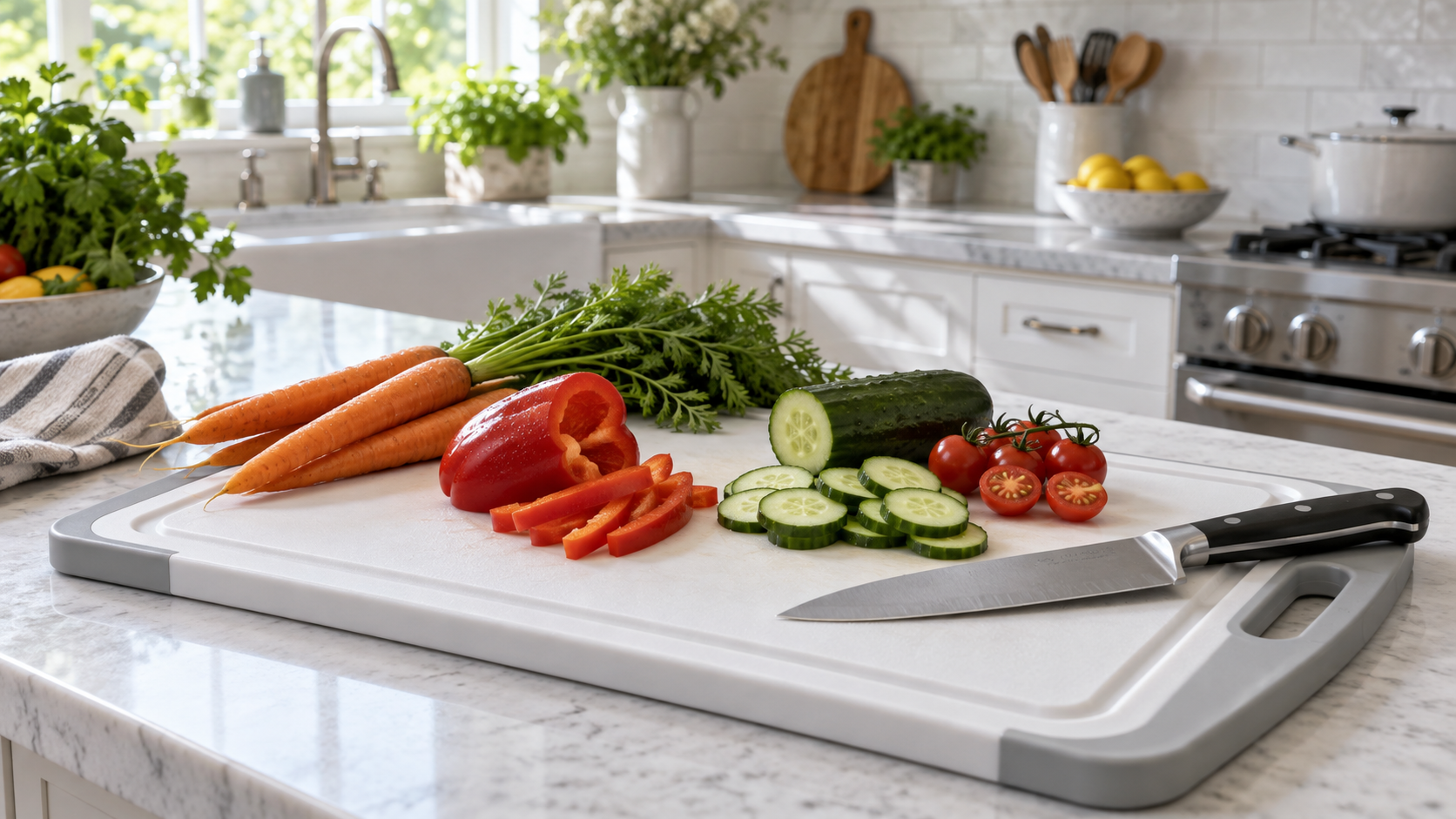
Wood’s strengths
Wood feels gentle under a knife and can be comfortable for long prep sessions. It needs hand washing, air circulation, and enough time to dry rather than a damp drawer.
Plastic’s strengths
Plastic is light, easy to move, and some boards tolerate dishwasher cleaning. It can show knife grooves over time, so inspect the surface and replace it when it becomes difficult to clean.
Choose by handling
Pick wood for a stable prep station and a user who will maintain it. Pick plastic for flexible, separate boards or a household that values easy washing and quick drying.
Knife feel and drying time trade places
Wood is quiet and forgiving under a knife, but it needs hand washing, airflow, and time to dry. Plastic is lighter and often easier to sanitize in a dishwasher, yet knife grooves accumulate with use. Neither material replaces prompt cleaning; the best board is the one that can be cleaned and fully dried after every task.
Use more than one board when the workflow needs it
A separate board for raw protein and produce reduces cross-use between tasks. Store boards upright so air can reach both sides, and replace any board that has deep cracks or an unstable surface. The material decision should include storage and replacement, not just the first cutting feel.
Care is the material difference
Wood asks for hand washing and open drying; plastic asks for inspection as knife grooves accumulate. Both can support safe food preparation when cleaned promptly and replaced when damaged. Separate boards by task if the household handles raw protein often, and store them upright so the surfaces do not remain damp.
Separate boards can simplify a busy kitchen
One board can be reserved for raw protein and another for produce or bread. Wood offers a comfortable knife feel and needs air; plastic offers light handling and often simpler machine washing. Inspect both for cracks and deep grooves. Material, cleaning, drying, and storage form one decision.
FAQ
Which is more sanitary?
Both require prompt cleaning and complete drying; a damaged board of either material is a problem.
Can wood go in the dishwasher?
Usually not unless the maker explicitly says so.
Should meat and vegetables share a board?
Use separate boards or clean thoroughly between tasks according to food-safety guidance.
The best material is the one you can keep stable, clean, and dry. Wood rewards care; plastic rewards easy handling.