
Lodge Cast Iron vs Nonstick Skillet
Cast iron and nonstick answer different pan questions: one stores heat and builds sear, the other lowers release friction for delicate food.
Eggs and delicate foods
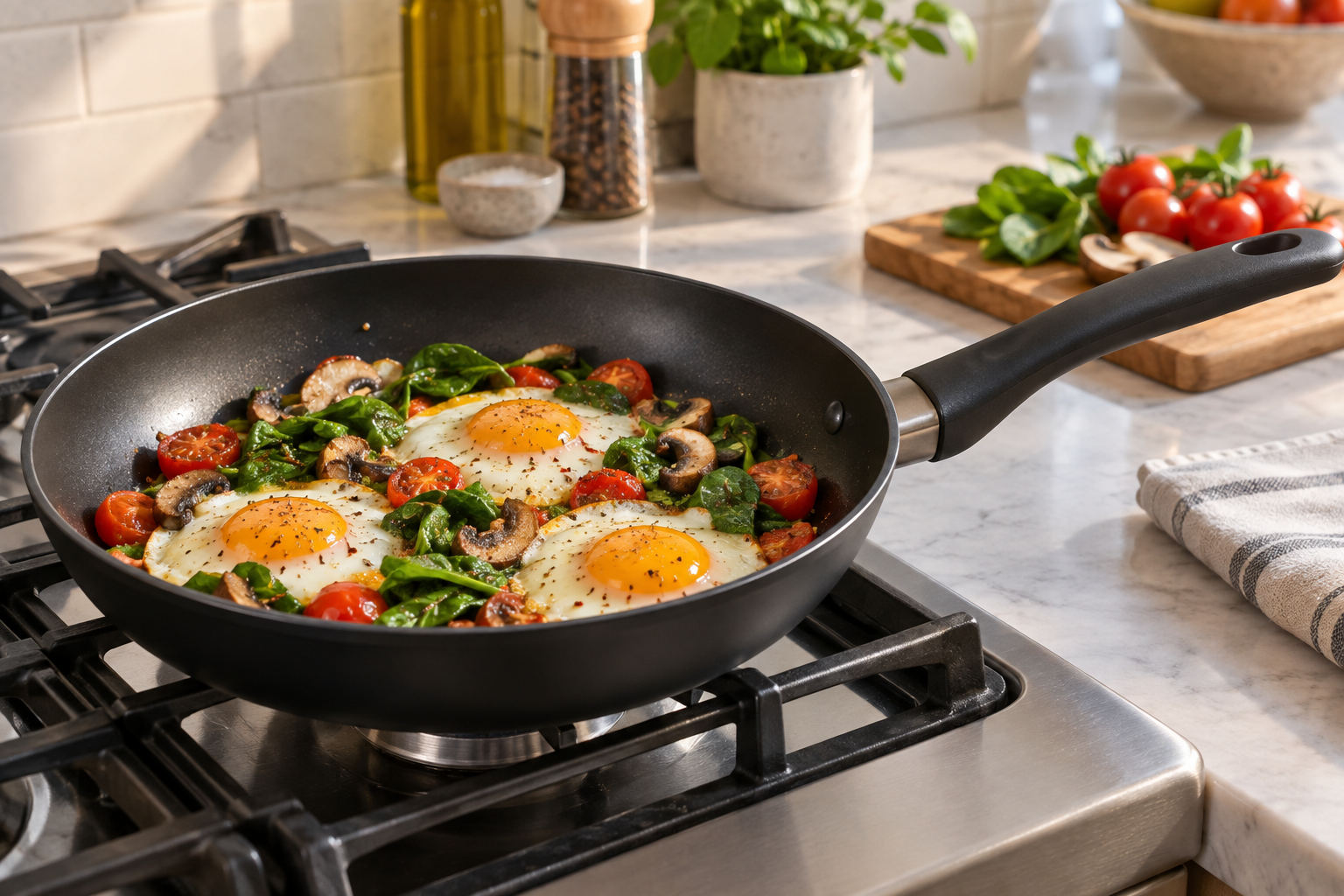
A maintained nonstick surface makes eggs and pancakes forgiving. Cast iron can work, but temperature, seasoning, and technique matter more.
Searing and oven work
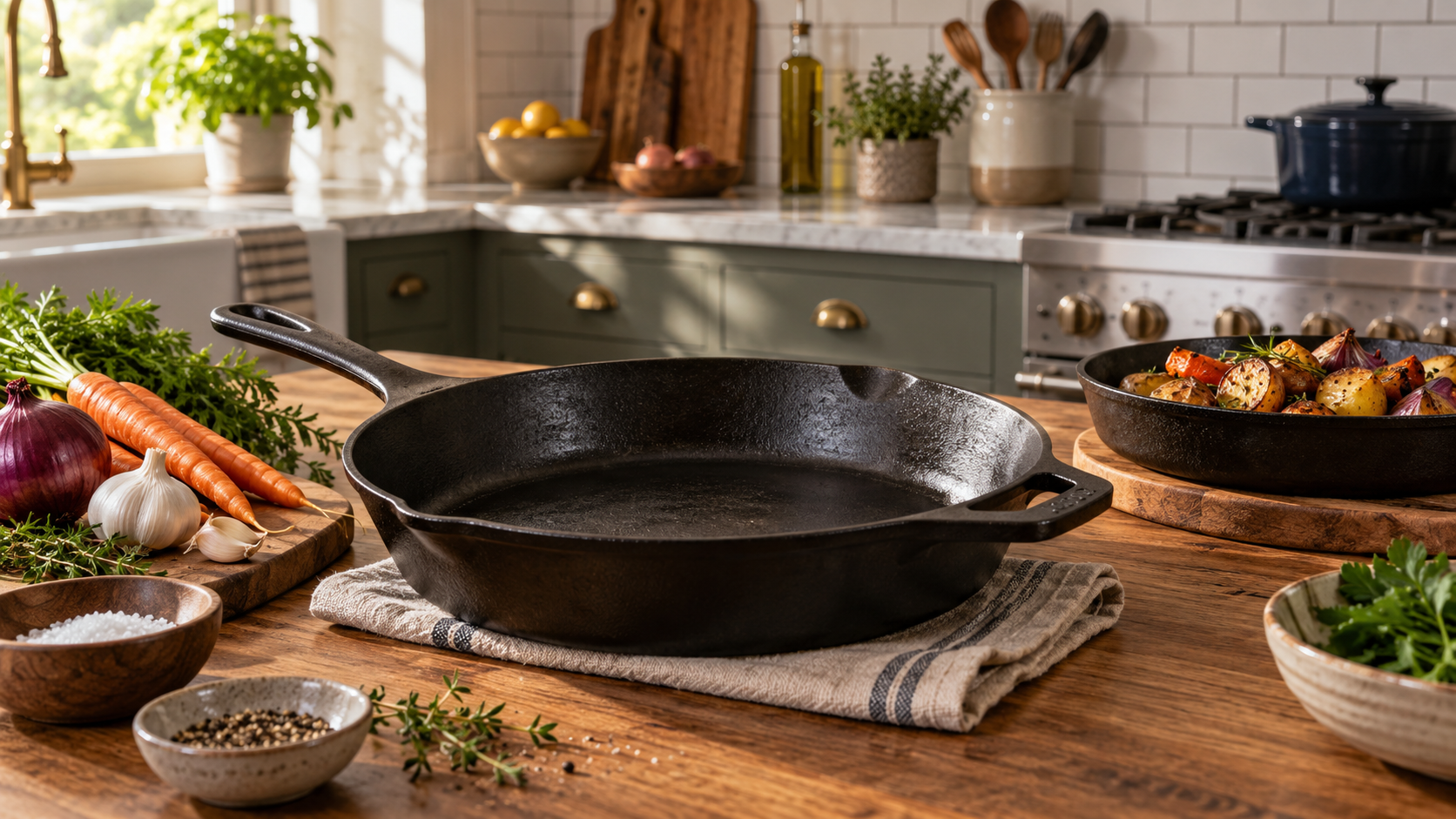
Cast iron’s mass and oven tolerance make it a strong searing and roasting tool. Nonstick is usually chosen for lower-friction cooking and may have tighter heat limits.
Maintenance and longevity
Nonstick asks you to protect a coating; cast iron asks you to dry and season. Neither is maintenance-free, but the failure mode is different.
Eggs and steak ask for different metal
Nonstick gives an easy release for eggs and delicate fish at moderate heat. Cast iron gives stable heat for searing and can move from stovetop to oven, but it is heavy and requires seasoning care. The comparison becomes clear when the food is named: one pan reduces friction, the other builds a browned surface.
The two pans can coexist
A household that cooks both omelets and steaks may get more value from one pan of each type than from a compromise pan. Store the cast iron where it can be lifted safely and keep the nonstick away from metal utensils. The choice is about a repeated task and a repeated care routine.
Name the food before naming the winner
Nonstick reduces friction for eggs and fish; cast iron retains heat for searing and oven meals. The two pans can complement each other because their surfaces reward different techniques. Compare the weight, heat response, utensil care, and cleanup you will repeat for the foods on your weekly menu rather than asking which material is best in general.
Keep the care rules beside the food rules
Nonstick needs utensil and heat discipline; cast iron needs drying and seasoning discipline. Eggs may favor the coating, while steak may favor retained heat. Compare the handling, weight, surface, and cleanup for the meals the household repeats. A two-pan setup can be more economical than making one material cover every technique.
The differences that change the decision
| Product | Pan type | Material / surface | Heat behavior | Care note |
|---|---|---|---|---|
| Lodge Cast Iron Skillet10.25-inch skillet | Cookware | |||
| Nonstick Frying PanGood Grips Non-Stick Pro Frypan | Nonstick frying pan | Hard-anodized body with nonstick coating | Stovetop nonstick cooking; verify size-specific oven limit | Gentle utensil and coating care required |
FAQ
Which pan is easier for beginners?
Nonstick usually reduces sticking immediately; cast iron rewards learning heat and care.
Can cast iron replace nonstick?
It can cover many tasks, but delicate eggs and low-fat cooking are easier on a sound nonstick surface.
Should a kitchen own both?
Often yes if both delicate release and high-heat searing occur regularly.
Use nonstick for low-friction delicate cooking and cast iron for heat retention and searing. The useful set is often complementary, not exclusive.
Side by side: Lodge Cast Iron Skillet vs Nonstick Frying Pan