
Stainless Steel vs Nonstick Cookware
Stainless steel favors browning and responsiveness; nonstick favors easy release. A kitchen that cooks both delicate and high-heat foods often needs both surfaces.
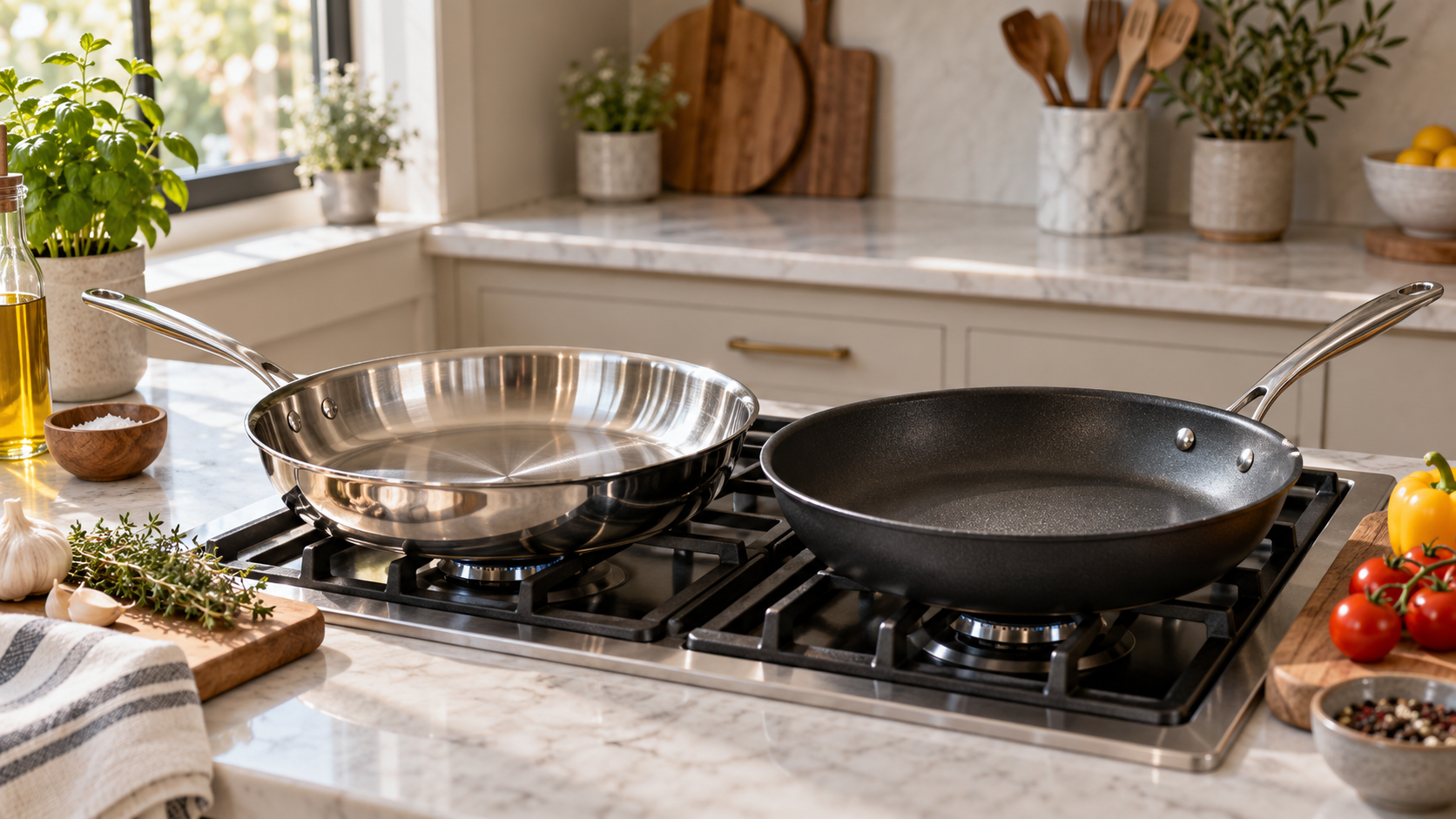
What stainless asks from the cook
Preheat the pan, add oil, and allow food to release before turning. The reward is fond for sauces and a surface that tolerates high heat and metal tools.
What nonstick removes
Eggs, pancakes, and delicate fish need less coaxing. The tradeoff is a coating that requires gentler utensils and sensible heat.
A material-by-task choice
Use stainless for searing, pan sauces, and acidic foods; use nonstick for delicate release and low-friction breakfasts. Do not force one surface to be universal.
Release versus browning
Nonstick lowers the amount of fat and attention needed for eggs, pancakes, and delicate fish. Stainless steel can build fond for pan sauces and tolerate higher heat, but it rewards correct preheating and a patient release. Those are distinct cooking behaviors rather than a simple good/bad material ranking.
A mixed collection is often the practical answer
Use nonstick where cleanup and release are the priority, and stainless where browning and deglazing are part of the recipe. Read the care instructions for both: coatings have utensil and heat limits, while stainless can show discoloration and sticking when used cold. Buy the pan for the job, not the material slogan.
Material is a cooking behavior
Stainless rewards heat control and a patient release; nonstick rewards low-friction cooking and quick cleanup. Both can be good, but they ask the user to behave differently. Build a mixed collection when the household cooks both delicate foods and browned sauces. The practical choice is the surface that solves the next recurring meal.
The choice can change by meal
There is no need to make every pan the same material. Use nonstick for eggs, pancakes, and delicate fish; use stainless for browning, vegetables, and pan sauces. Read the manufacturer’s heat, utensil, and dishwasher guidance for the exact coating. A mixed collection can reduce both sticking and premature coating wear.
FAQ
Why does food stick to stainless?
Often because the pan or food was not ready to release; heat, oil, moisture, and timing all matter.
Is nonstick safer at any temperature?
Follow the manufacturer’s maximum heat and empty-pan guidance.
What is the best first pan?
Pick the task you cook most often, then add the complementary material later.
Stainless builds flavor through browning; nonstick saves effort through release. The choice becomes clearer when tied to the food, not a material slogan.