
Cast Iron vs Stainless Steel: Which Should You Choose?
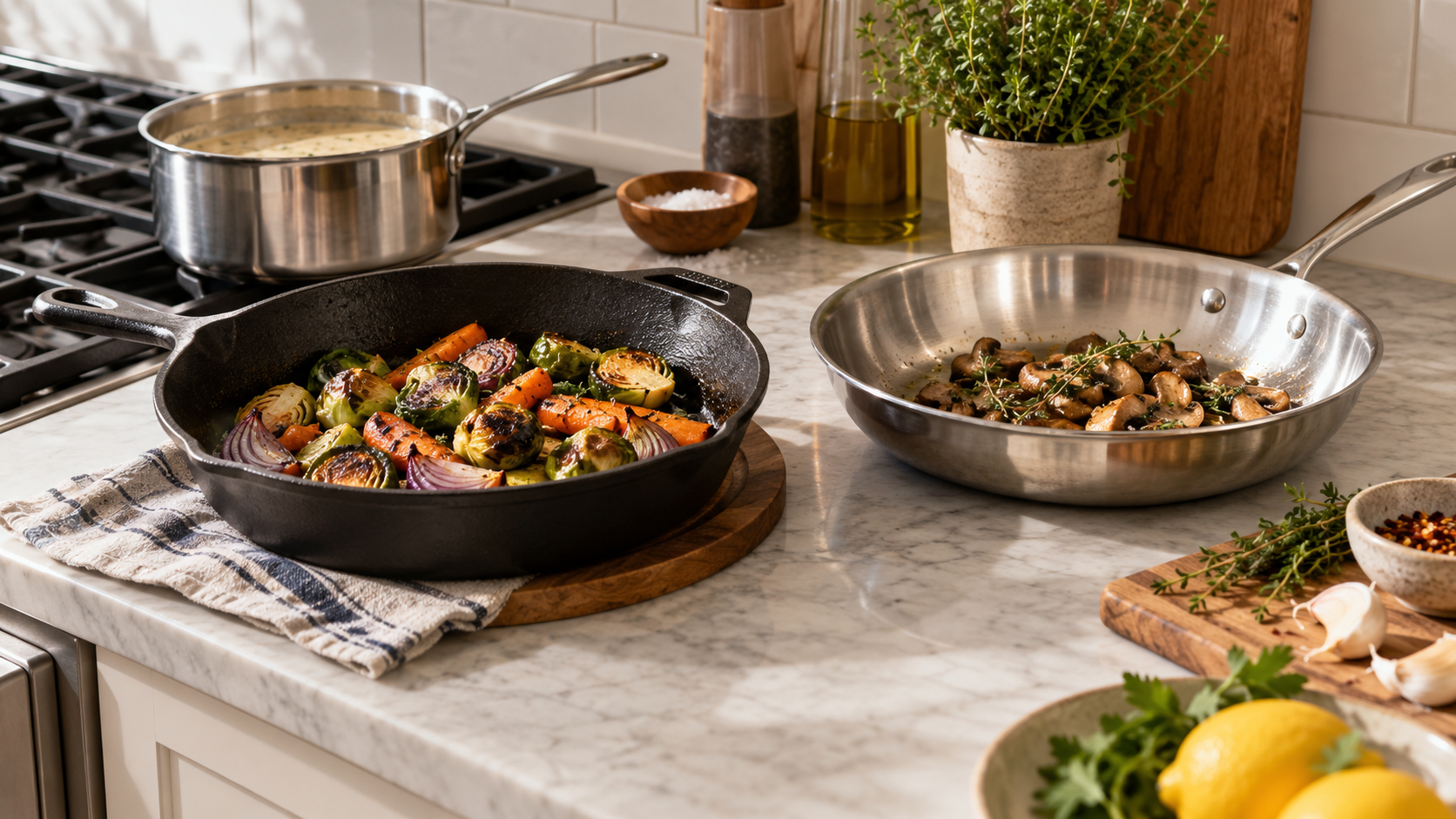
Cast iron stores heat and stainless steel changes temperature quickly. That distinction affects searing, acidic sauces, weight, and how much attention the pan needs.
Heat behavior
Cast iron takes longer to heat but holds a strong, steady temperature. Stainless responds faster to burner changes and is easier to use when a sauce needs quick control.
Food and reactivity
Stainless is a practical home for acidic ingredients. Cast iron can react with long acidic cooks, especially when seasoning is new or thin.
Handling and care
Cast iron is heavier and needs drying and seasoning habits. Stainless is lighter to maintain but may show stuck fond until technique improves.
Heat retention versus response
Cast iron stays hot when food is added and is forgiving for searing, roasting, and oven work. Stainless reacts more quickly when a burner changes and is easier to lift, but the cook must manage preheat and food release. Acidic ingredients are another difference: stainless is generally more relaxed, while seasoned iron needs more attention.
Weight changes the safety equation
A heavy skillet can be stable but difficult to lift with one hand, especially when full. Stainless is easier to maneuver and pour, while its lighter construction can lose heat more quickly. Consider the user, the sink, and the storage shelf before treating durability as the only criterion.
Responsiveness affects confidence
Stainless changes temperature quickly when the burner moves, while cast iron smooths those changes and holds heat. That difference is useful for a cook who adjusts sauces often or one who wants a stable sear. Include lifting weight, acidic recipes, and storage height in the decision because pan performance happens in the whole kitchen.
Include acidic food and lifting strength
Cast iron’s heat stability is useful for searing, but acidic simmering and seasoning care require attention. Stainless handles acidic sauces and responds quickly, while a full pan is easier to lift. Ask who will carry it from burner to sink and where it will be stored. The best material supports the cook as well as the recipe.
FAQ
Which is better for steak?
Both can sear; cast iron offers heat retention while stainless makes pan-sauce fond easier to manage.
Can tomatoes go in cast iron?
Short cooks may be fine, but follow care guidance and avoid long acidic simmering in a newly seasoned pan.
Which is easier to lift?
Stainless is usually lighter, especially in larger diameters.
Choose cast iron for heat retention and oven meals; choose stainless for quicker control, lighter handling, and acidic sauces.