
Stainless Steel vs Ceramic Cookware Sets
Stainless-steel and ceramic cookware sets look similar in a cabinet but create different cooking and care habits.
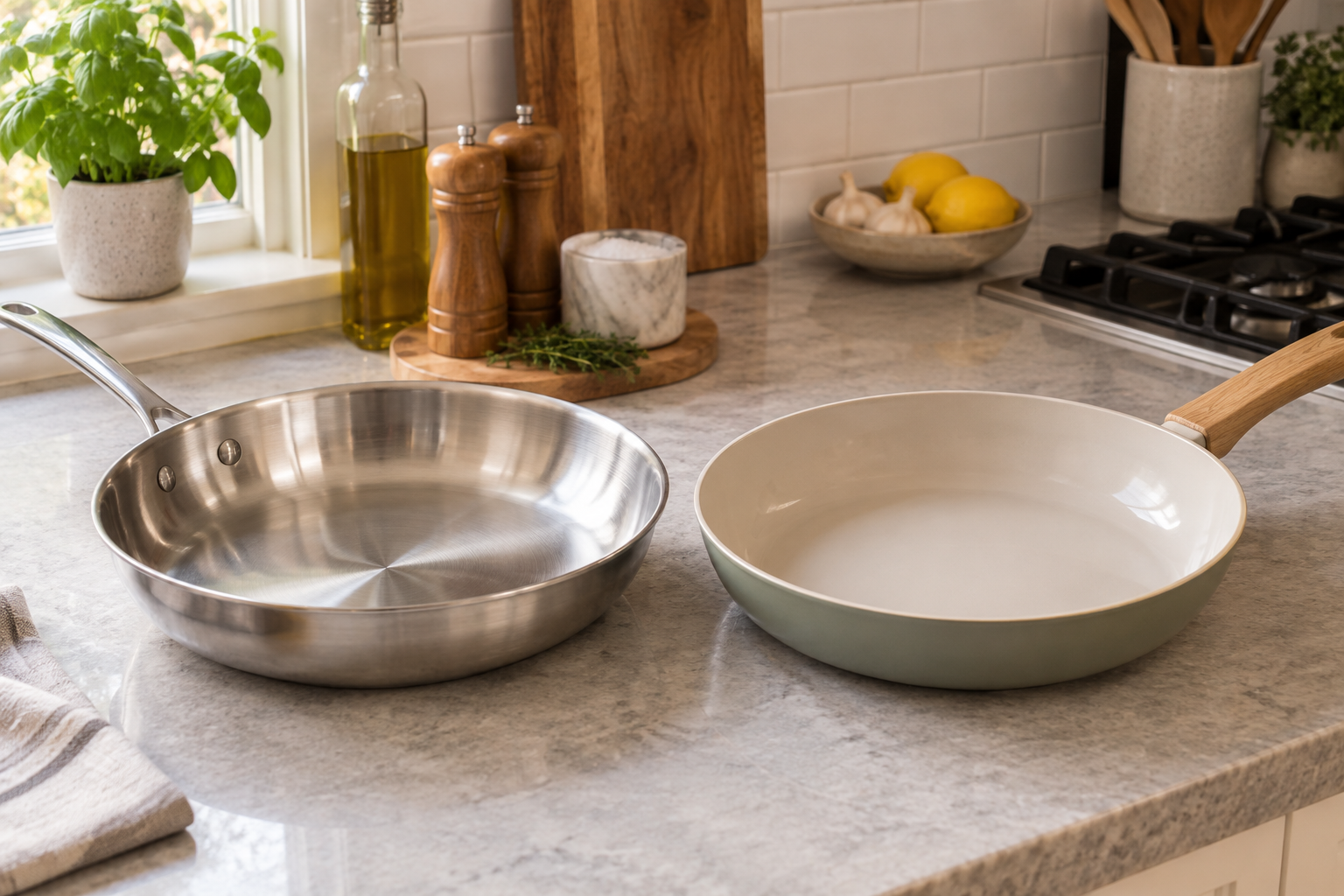
Stainless steel’s learning curve
Uncoated stainless can sear and build fond, but food release depends on preheating, oil, and timing. It tolerates high heat and utensils better than a coating.
What ceramic-coated sets change
Ceramic coatings offer easy release at first and a lighter-feeling cooking path, but the surface still needs careful heat and utensil use. Coating life and oven limits vary by maker.
Buy a set only when the pieces fit
Count the pans you actually use, check lid storage and handle clearance, and compare whether the set includes a useful skillet rather than duplicate small saucepans.
Stainless and ceramic solve different problems
Uncoated stainless steel rewards preheating, oil control, and deglazing. Ceramic-coated cookware lowers the learning curve for release but asks the cook to respect coating temperature and utensil limits. A matching set is useful only when its materials fit the meals, heat sources, and care habits of the household.
Look at handles and lids too
Material is only one part of a cookware set. Check handle attachment, lid storage, oven limits, induction compatibility, and whether the pieces fit the sink and cabinet. A set with excellent surfaces can still be a poor choice if the largest pan crowds the burner or the lids have nowhere to live.
Sets should be judged piece by piece
A stainless skillet may be excellent for a pan sauce while a ceramic-coated pan is easier for a delicate breakfast. Inspect the set’s actual pieces, handles, lids, oven limits, and storage footprint. A matching finish does not guarantee that every pan is useful for the same heat, food, or care routine.
A cookware set is a collection of compromises
Stainless steel can brown and deglaze, while ceramic coating can lower friction for delicate foods. Inspect the exact pan sizes, lid fit, handle shape, oven limits, and storage before buying a matching set. A set is worthwhile when most pieces match the meals. Otherwise, choose individual pans with clearer roles.
The differences that change the decision
| Product | Pan type | Material / surface | Heat / cooktop fit | Care note |
|---|---|---|---|---|
| Stainless Steel SkilletD3 Stainless 10-Inch Fry Pan | Tri-ply stainless-steel frying pan | Uncoated stainless with bonded aluminum core | Oven-safe handle; exact temperature depends on manufacturer guidance | Requires preheating and normal stainless care |
| Ceramic-Coated Frying PanValencia Pro Frypan | Ceramic-coated fry pan | Hard-anodized aluminum with ceramic nonstick coating | Induction-compatible base | Coating care affects service life |
FAQ
Which is easier to sear in?
Stainless steel gives more direct browning and fond-building once technique is familiar.
Does ceramic stay nonstick forever?
No. Coating performance changes with heat, abrasion, and care.
Are matching sets always better value?
Only when most included pieces earn regular use and the storage plan works.
Choose the material that matches your cooking behavior. A smaller mixed collection can outperform a large matching set.
Side by side: Stainless Steel Skillet vs Ceramic-Coated Frying Pan