
What Blender Size Is Right for Your Kitchen?
Blender size is a three-part problem: how much food you make, how much room the mixture needs to circulate, and where the container can be stored.
Capacity is not the same as useful capacity
A large jar may advertise generous volume, but a tiny batch can sit below the blade or fail to circulate. A personal cup can be efficient for one smoothie but cannot become a family soup vessel.
Measure vertical space
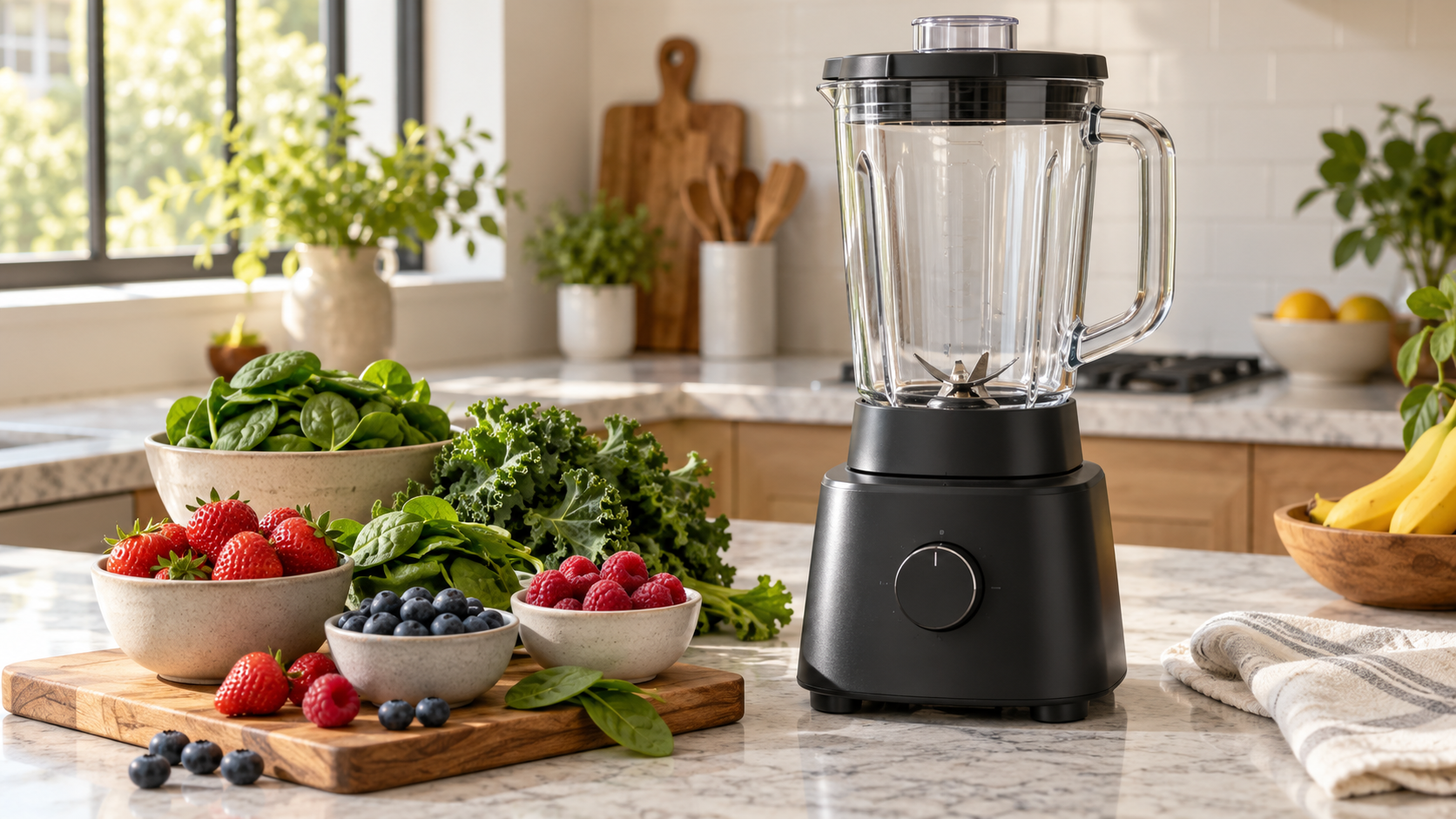
Check the blender assembled, with the lid removed if the manual requires that, and measure the sink path. Tall pitchers such as the E310’s are excellent for batch work but may need to be stored on the counter.
Use-case sizing
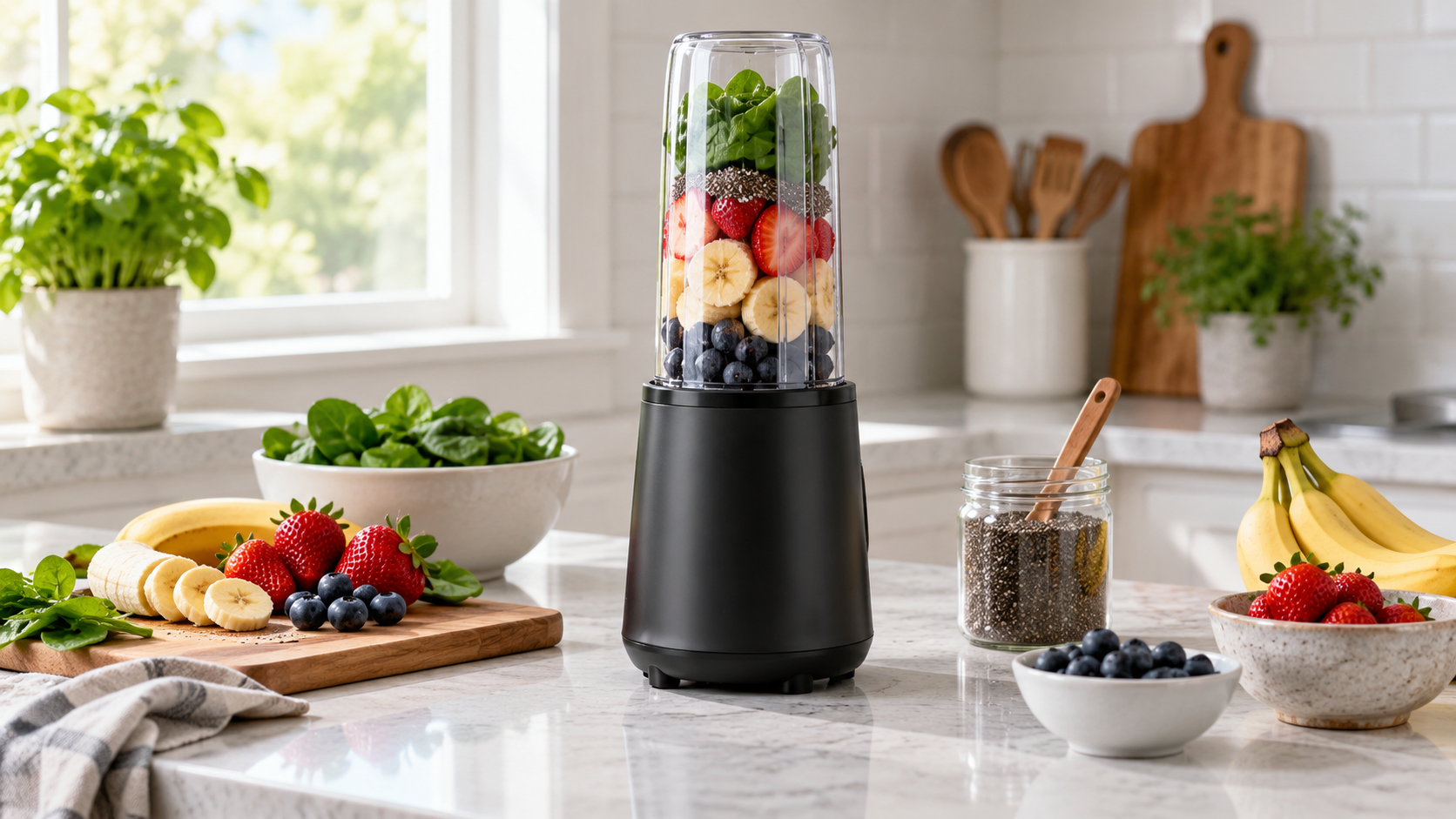
Choose a personal cup for one serving, a mid-size jar for couples or small batches, and a full-size jar for soups, sauces, or several smoothies. Verify the manufacturer’s minimum and maximum loads rather than inventing a universal serving chart.
Minimum batch size matters as much as maximum
A large jar may need enough liquid for the blade to circulate, while a personal cup may not leave room for a family batch. Write down the smallest and largest recipes you make in a month, then compare them with the manual’s guidance. Capacity printed on the box does not reveal how much food must be present for a smooth result.
Cabinet height is an everyday constraint
Tall blender containers often need to be stored beside the base or under an open shelf. Measure the lid, tamper, and power cord path as well as the body. A slightly smaller model that can stay accessible may be used more often than a larger machine that has to be lifted out of a deep cabinet.
Storage can decide the model
A blender that cannot stand under the cabinet will be stored separately from its base, adding a step before every use. Measure the lid, tamper, and cord path, then compare the smallest batch that the blade can circulate. A slightly smaller container may be the better everyday fit even when its maximum volume is lower.
Size includes the cabinet and the sink
Measure the blender with its lid, tamper, and cord, then measure the sink opening and drying space. A large jar that cannot be stored or washed comfortably will be used less. Also check the smallest amount the blade can circulate. A good size fits the recipes and the physical path around them.
FAQ
Why can a big blender struggle with a small batch?
The ingredients may not reach the blade or circulate through the jar.
Should height or width decide storage?
Both. Height affects cabinets, while width affects the counter and sink.
Is a larger jar always more versatile?
Only if the minimum batch and storage requirements still work for your recipes.
Size the blender from the smallest batch you make often and the tallest storage point you can safely accommodate.