
How Many Watts Do You Really Need in a Blender?
Blender wattage is an input number, not a texture guarantee. The useful question is whether the motor, blade, jar, and load can work together without stalling.
What watts can and cannot tell you
Wattage describes electrical input under a particular measurement method. It does not tell you how efficiently the motor transfers power, how the blade is shaped, or whether the jar lets ingredients circulate.
Match power to the mixture
Thin smoothies ask less of a machine than frozen fruit, nut butter, hummus, or a dense soup. For thick work, container geometry, tamper access, pulse control, and the maker’s stated limits deserve more attention than a larger number.
A better specification checklist
Read the manual for maximum load, hot-liquid rules, duty cycle, and cleaning. Then compare jar size, blade assembly, controls, and replacement parts. A personal blender can be powerful for one cold serving while still being the wrong tool for a family batch.
Watts describe input, not the finished texture
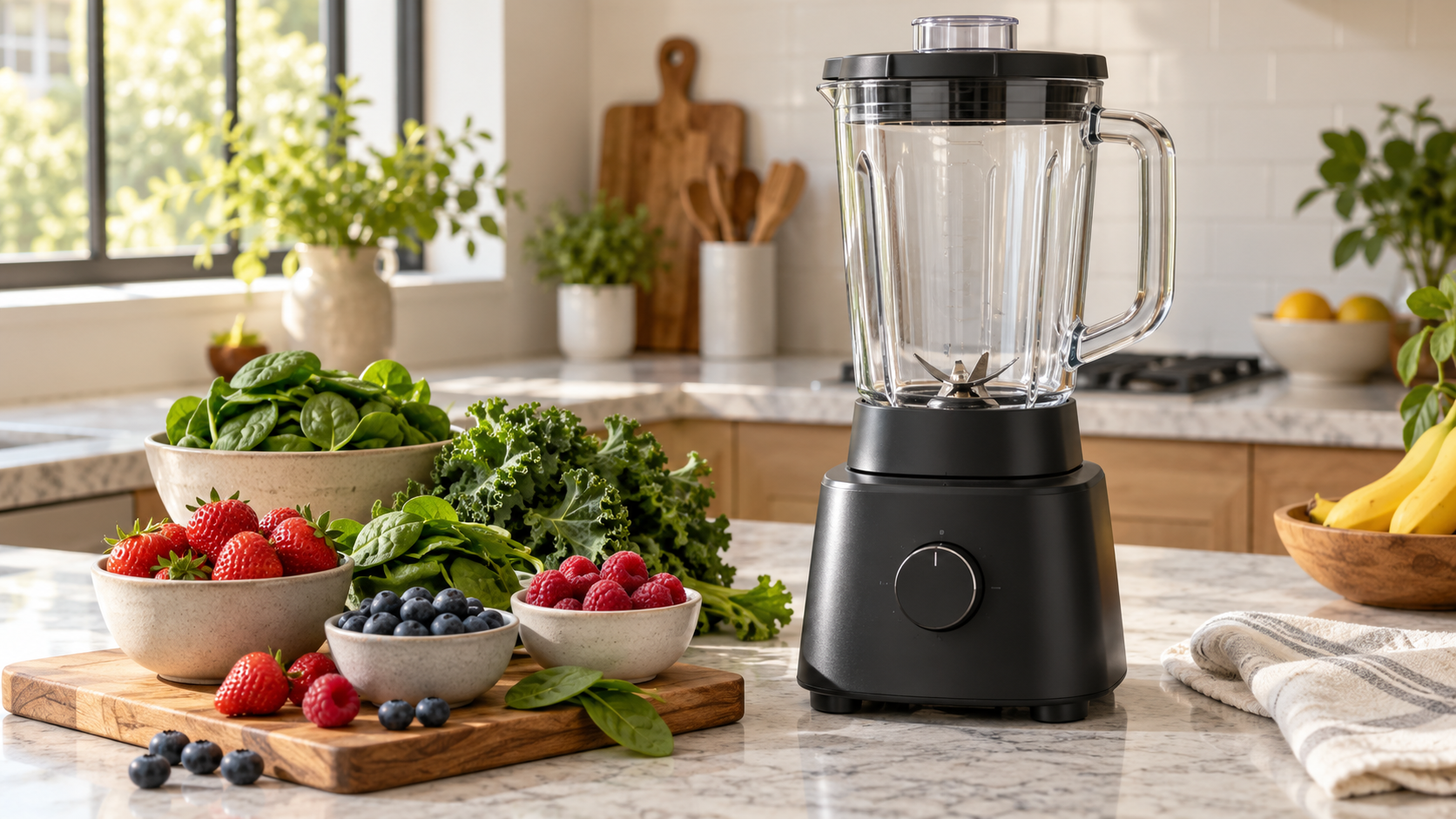
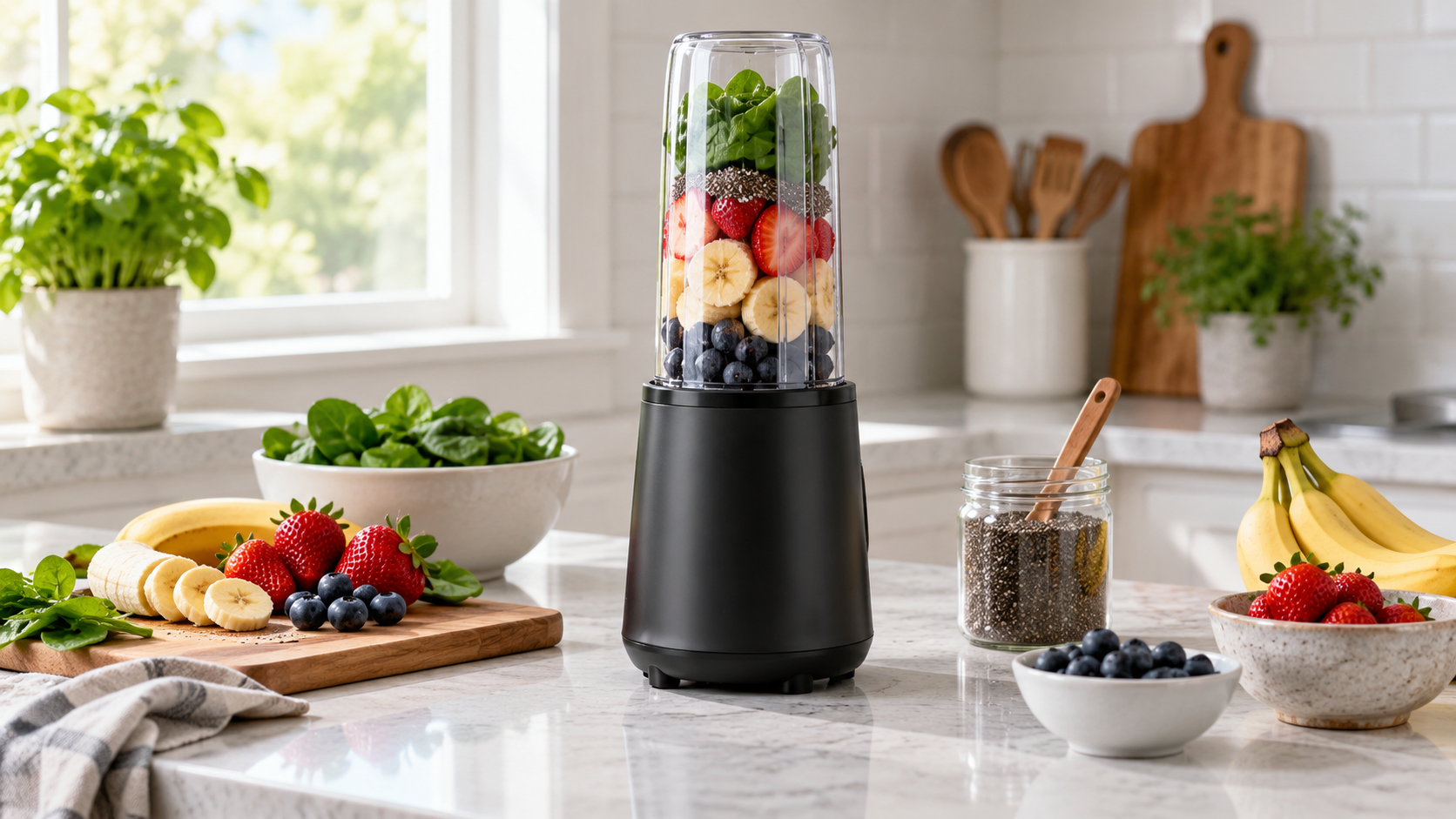
Motor wattage is measured before the load, while a blend is shaped by the motor’s control, blade profile, container, ingredients, and duty cycle. A narrow personal cup can feel powerful with a small smoothie yet struggle with a thick mixture. A larger jar may need more liquid to circulate even when its motor is rated higher.
Use wattage as a screening number
Compare like with like: full-size against full-size, personal against personal. Then check the manual’s limits for ice, hot liquids, frozen ingredients, and run time. A modest motor in a well-matched container can be more useful than a larger number attached to a vessel that does not suit your recipes.
Specifications need a recipe beside them
Read wattage next to the manufacturer’s container size, blade design, ingredient limits, and recommended run time. A powerful motor cannot make a small cup behave like a food processor, and a modest motor can work well when the load is liquid and the jar is shaped for circulation. The recipe supplies the context the number lacks.
Check the duty cycle and ingredients
A motor rating should be read beside the manufacturer’s run-time guidance and ingredient limits. Ice, frozen fruit, nut butter, and hot liquids stress a blender differently. A larger watt number does not turn a tall liquid jar into a food processor. Match motor capacity with the load, then verify the container and blade can do that job safely.
FAQ
Is the highest wattage the best blender?
No. It is one clue among motor design, blade, vessel, controls, and load.
Why does frozen food change the decision?
Frozen ingredients increase resistance and often need liquid or a tamper to keep moving.
What should be checked in the manual?
Maximum volume, hot-liquid restrictions, recommended run time, and care instructions.
Use wattage to narrow a field, then choose from the work the blender must actually perform. A bigger input number cannot compensate for a poorly matched jar or recipe.