
Drip vs Single-Serve Coffee Makers: Which Fits Your Routine?
Drip and single-serve coffee makers solve different scheduling problems: a carafe shares coffee efficiently, while a pod or cup system minimizes waiting and leftovers.
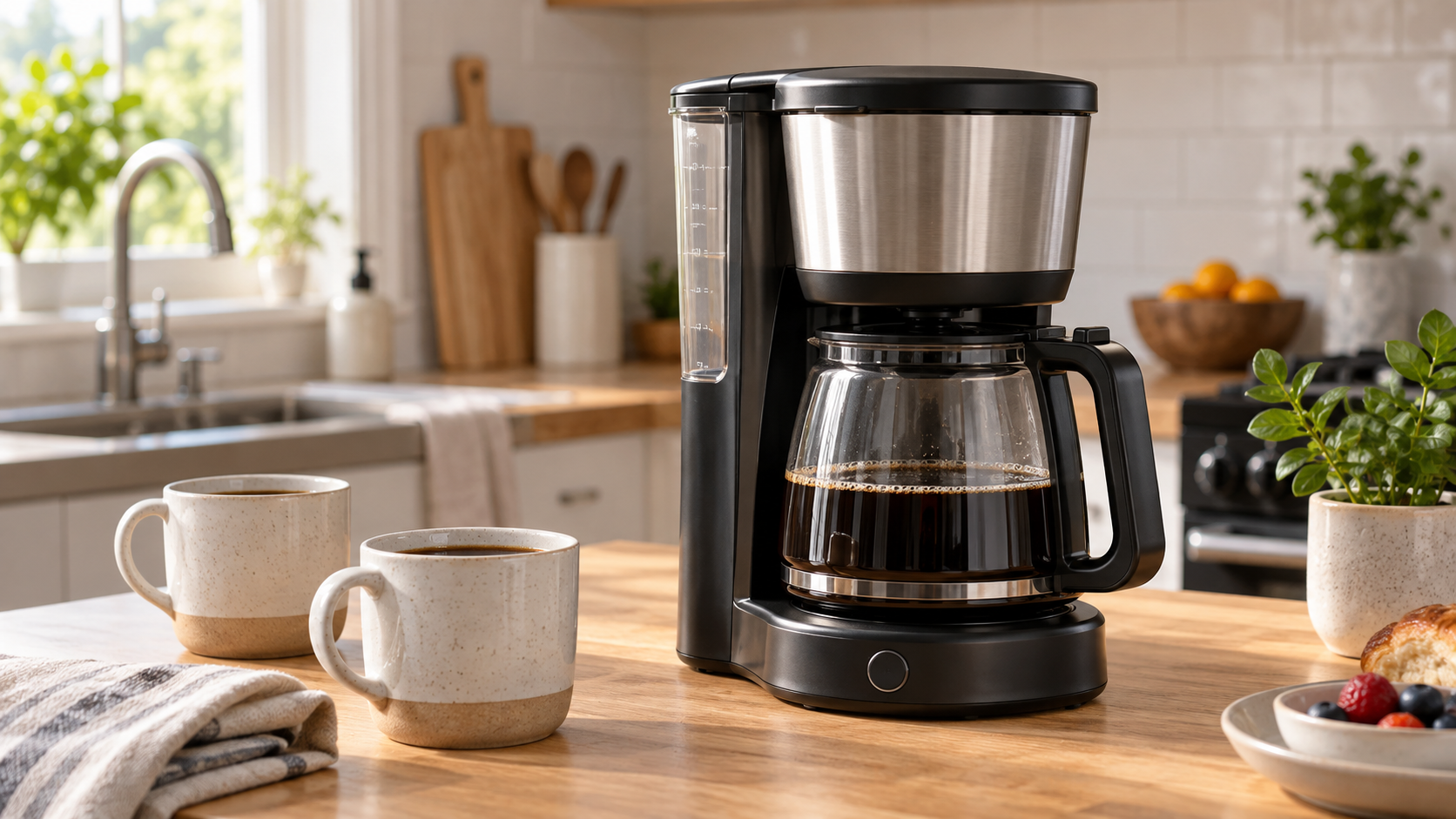
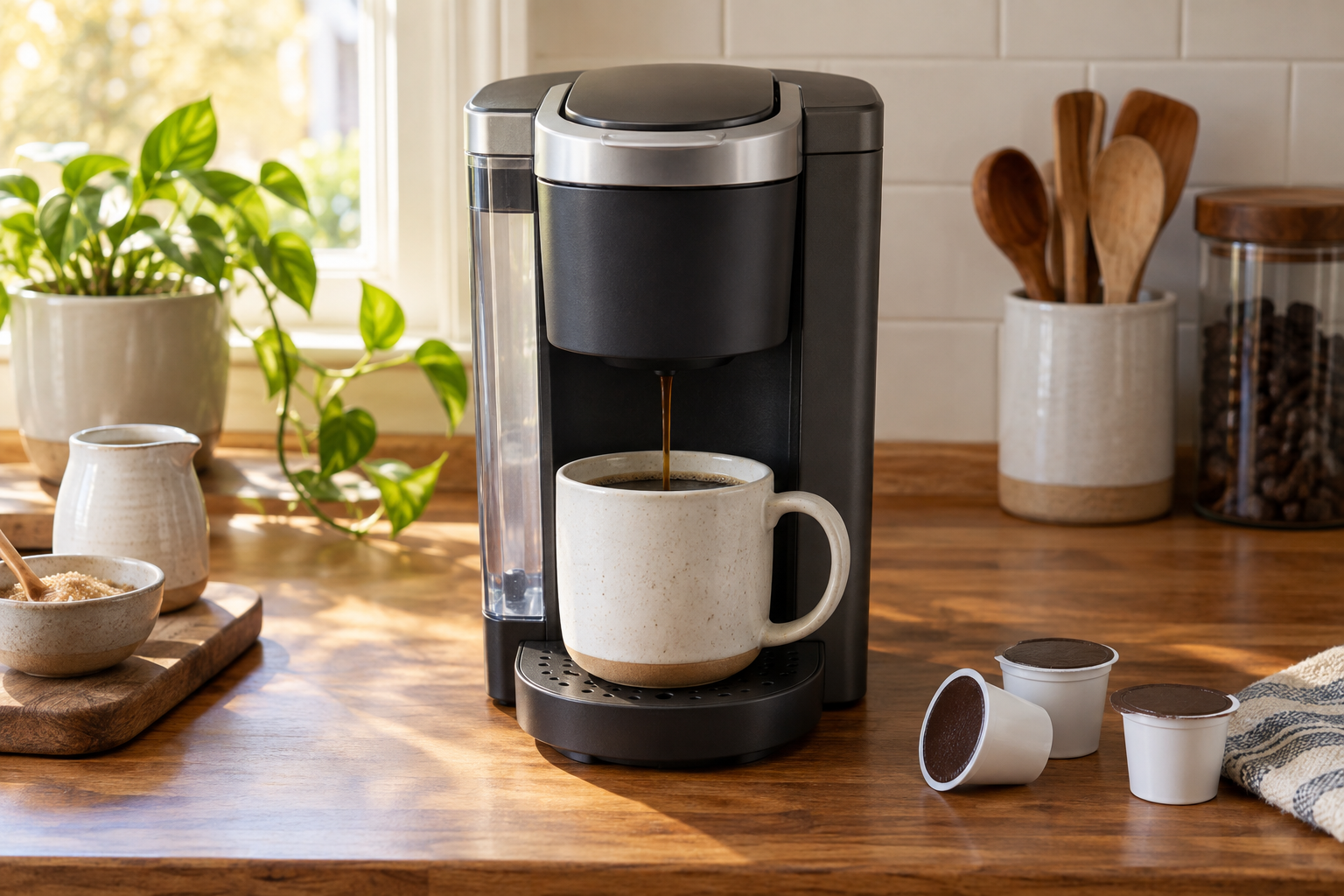
How drip brewing works
A drip brewer heats water and distributes it through a basket of grounds into a carafe or mug. It is efficient when two or more people want the same coffee, and it gives control over beans and batch size.
What single-serve changes
Single-serve systems trade shared volume for speed and individual choice. The waste stream, capsule cost, water reservoir, and limited cup geometry become part of the ownership decision.
Where each format wins
Use drip for a shared morning, larger batches, and lower packaging waste. Use single-serve when drinkers wake at different times, want different flavors, or value a one-cup cleanup.
Shared coffee versus staggered coffee
Drip brewing makes the most sense when several people want the same base coffee in one window. Single-serve brewing earns its space when people wake at different times, prefer different roasts, or regularly leave half a carafe behind. The second format also shifts the environmental and cost question toward pods, reusable capsules, and packaging disposal.
Taste control and cleanup move in opposite directions
A drip brewer gives control over beans, dose, grind, and batch size, but the basket and carafe need washing. A single-serve system simplifies the cup but narrows the material choices and creates a used-pod stream. Decide which inconvenience you will repeat before comparing heating speed.
Waste belongs in the format decision
Single-serve convenience shifts some work from brewing into buying and discarding pods. Drip brewing shifts it into grounds, a basket, and a carafe. Neither format is automatically the responsible choice: the answer depends on how much coffee is wasted, whether reusable options are realistic, and how often different drinkers need separate cups.
The format changes the shopping trip
Drip coffee lets a household choose beans and grind fresh, then share one batch. Single-serve systems make variety and timing simple, but each cup carries a pod cost and a waste decision. Include refill frequency, storage for pods or beans, and the person who empties the machine. Convenience is a workflow, not a button.
FAQ
Is single-serve always faster?
It often shortens preparation and cleanup, but heating and pod disposal still take time.
Which makes better coffee?
Neither format guarantees better coffee. Fresh beans, water, temperature, and brew control matter more than the label.
Can a drip brewer make one mug?
Some compact models can; check the basket and carafe or mug support rather than assuming.
Choose drip when the household shares coffee. Choose single-serve when individual timing and minimal leftovers outweigh the cost and waste of single portions.